

Web design changes every year, but not every trend is worth chasing. For Calgary businesses, the most useful website improvements in 2026 are not only about having a modern-looking homepage. They are about building a site that loads quickly, works well on mobile, answers customer questions, and makes it easy for people to take the next step.
For many local companies, a website is now part of the sales process. A visitor may compare several businesses before calling, booking, or requesting a quote. If the website is slow, confusing, or outdated, that visitor may not come back.
This article looks at the web design trends Calgary businesses should understand in 2026, especially if their current site has not been updated in several years.
Calgary’s business market is increasingly digital. Professional services, trades, healthcare clinics, construction companies, retailers, restaurants, and technology firms all rely on their websites to help attract and convert customers.
A basic website can still provide contact information, but that is usually not enough anymore. People expect pages to load quickly. They expect the site to work properly on a phone. They want clear service information, pricing guidance where possible, reviews, examples of work, and simple ways to contact the business.
Search has also changed. Customers are not only using Google in the traditional way. Some are asking AI tools for recommendations, comparing companies through summaries, or using search results that include AI-generated answers. That means websites need to be clearer, better structured, and more helpful than before.
AI is becoming part of how people search for information. This does not mean every business needs an AI chatbot or complicated automation. For most Calgary businesses, the first step is much simpler: make sure the website clearly explains what the company does, who it serves, where it works, and why customers should trust it.
AI-assisted search tools tend to rely on information that is easy to understand and verify. A website with vague service pages, missing location details, or thin content may be harder for these systems to interpret.
Useful AI-ready content often includes:
This is where Generative Engine Optimization, or GEO, comes into the conversation. GEO is about organizing content so search engines and AI systems can better understand and reference it.
The goal is still the same: help real people find accurate information and make a decision.
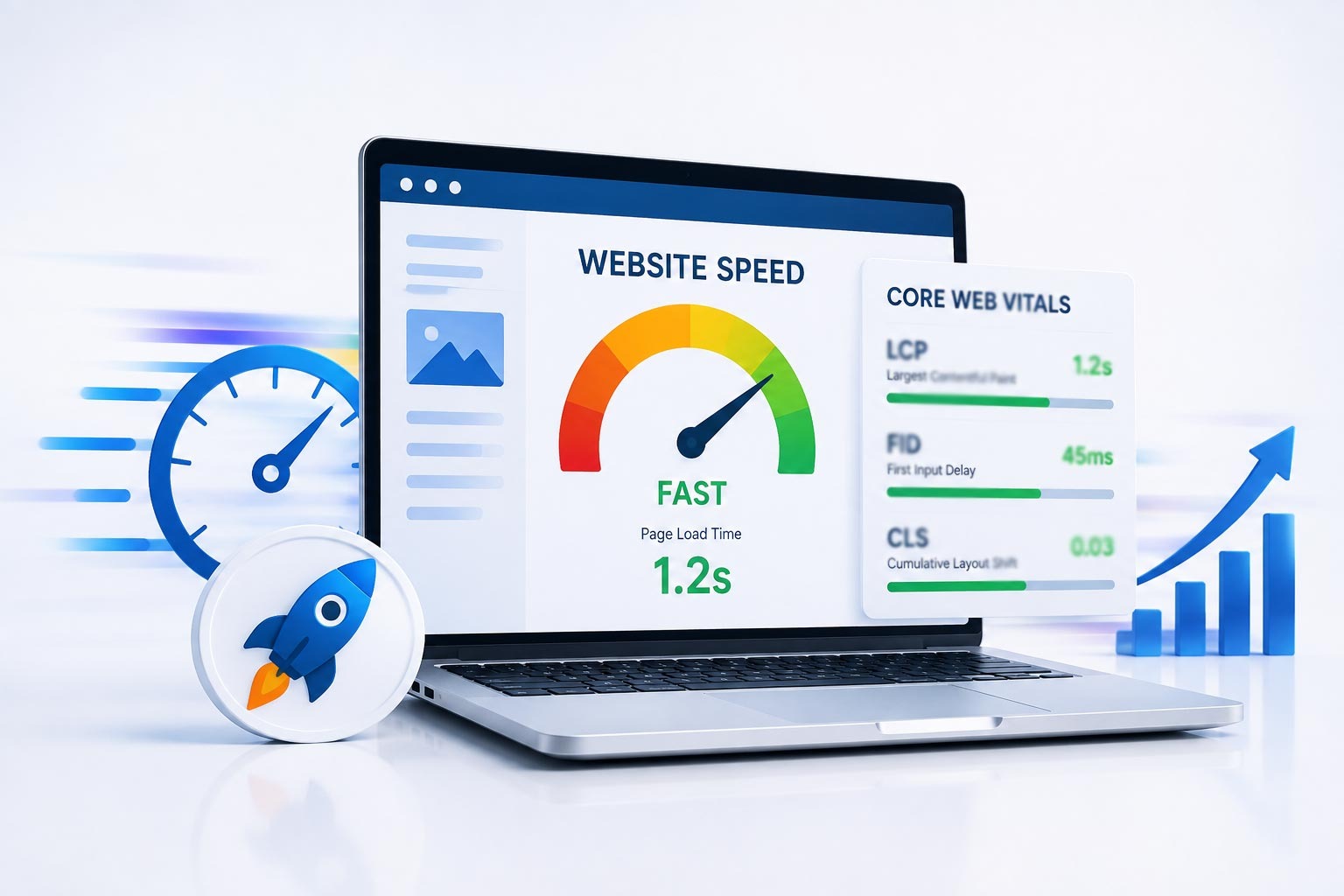
Website speed continues to matter. A slow website can frustrate visitors, especially on mobile devices. It can also affect search performance.
Google’s Core Web Vitals are one way to measure page experience. The main metrics include:
Older websites often struggle with these areas because of oversized images, too many plugins, outdated themes, weak hosting, or unnecessary scripts.
For Calgary businesses, improving speed usually starts with practical fixes:
A faster site is not only better for rankings. It also makes the experience easier for customers.
A website should look professional, but appearance is only one part of the job. For most Calgary service businesses, the website needs to help generate calls, quote requests, bookings, or form submissions.
Conversion-focused design means the page is built around what the visitor needs to do next.
That may include:
Many improvements are simple. A business may not need a complete redesign to get better results. Sometimes the biggest difference comes from shortening a form, moving the phone number higher on the page, improving the service page copy, or adding proof that the company is active and trusted locally.
Good design should support the business goal, not distract from it.

Most people will visit a local business website from a phone at some point. For service searches, that may be the first and only visit before they decide whether to call.
Mobile-first design means the mobile version is planned carefully from the beginning. It should not feel like a squeezed version of the desktop site.
A strong mobile website should have:
This matters even more because Google uses mobile-first indexing. In simple terms, Google mainly looks at the mobile version of a website when understanding and ranking it.
If a site looks good on desktop but performs poorly on mobile, it may be losing potential leads.
Local SEO is still one of the most important parts of web design for Calgary businesses. A good website should clearly show where the business operates and what services it provides.
Schema markup can help with this. Schema is structured data added to a website’s code. Visitors do not usually see it, but search engines use it to better understand the page.
Common schema types for local businesses include:
Schema does not guarantee higher rankings, but it can help Google and other systems understand important business details more clearly.
For Calgary businesses, local SEO should also include:
This foundation helps both traditional search and AI-assisted search.
Accessibility is becoming a bigger part of website planning. A website should be usable by as many people as possible, including visitors who use screen readers, keyboard navigation, larger text, or high-contrast settings.
Even when accessibility is not the main reason for a redesign, it often improves the site for everyone.
Good accessibility practices include:
These improvements also make the site easier to scan, which helps users on mobile devices.
Accessibility is not only a compliance issue. It is a usability issue.
WordPress is still a popular choice for Calgary business websites because it is flexible and easy for teams to update. But not every WordPress website is built well.
Many older WordPress sites become slow because of heavy themes, too many plugins, outdated code, or poor hosting. In 2026, more businesses are looking for cleaner WordPress builds that are easier to maintain.
For some companies, a traditional WordPress site is still the right choice. For others, a more advanced setup such as headless WordPress may make sense.
Headless WordPress separates the content management system from the public-facing website. This can improve speed, flexibility, and security in some cases. However, it is not necessary for every business.
A small local company may be better served by a simple, well-built WordPress site. A larger company with more complex needs may benefit from a custom or headless setup.
The right choice depends on the business, budget, content needs, and long-term goals. Our WordPress development services cover both traditional and headless implementations, depending on what the project needs.
Calgary businesses do not need to follow every web design trend at once. The best place to start is with the basics:
If a website was built several years ago, it may be worth reviewing how it performs today. Start with a free website and SEO audit to see where your site stands or book a discovery call with our team at (587) 602-9832. We'll give you an honest assessment of what's working, what isn't, and what to prioritize first.